
You must know whether it is working in case you are pumping money and time into the SEO. This is the question many business owners are unable to answer; they want to know whether their investment in SEO is paying off. The solution is to know how to measure the SEO ROI in the right way.
Code Inc Solutions assists businesses in monitoring their search engine optimization and justifies the costs of their optimization. In this step-by-step guide, we will demonstrate to you the exact steps of measuring the SEO ROI in 2026 with simple and actionable steps that anyone can follow.
What Is SEO ROI, and What Does It Mean?
SEO ROI (Return on Investment) informs you of how much money you are making in comparison with how much money you are spending on SEO. It is easy to calculate: when you have invested $1,000 in SEO and earned 5,000 in revenue out of it, the ROI is positive.
Knowing your ROI in SEO is a way of making wise business choices. Should you invest more in SEO? Is your present strategy effective? What are the SEO strategies with the greatest success? Only in case you measure SEO ROI can you answer these questions.
SEO is a long-term investment as opposed to paid advertising, where the results are instant. This allows making its ROI a little bit more complicated, yet necessary to develop the business.
The Basic Formula to Measure SEO ROI
Before we get into the details, let’s understand the basic formula:
- SEO ROI = (Revenue from SEO – Cost of SEO) / Cost of SEO × 100
- For example, if you spent $2,000 on SEO in a month and generated $10,000 in revenue from organic traffic, your calculation would be:
- ($10,000 – $2,000) / $2,000 × 100 = 400% ROI
This means for every dollar you invested in SEO, you got back $4. That’s a fantastic return! However, calculating the actual numbers requires understanding what counts as costs and how to attribute revenue to SEO.
Calculating Your SEO Costs
In order to calculate the SEO ROI correctly, you have to be aware of the amount you are spending. The following are the key cost categories:
- Agency or consultant fees: In the case of an SEO firm such as Code Inc Solutions, the highest cost is usually this. Add all monthly retainer charges or project-related expenses.
- In-house employee cost: When you have people employed to do SEO, get their wages and the ratio of time they dedicate to the work of SEO.
- SEO Tools and Software: Sum up subscriptions to such tools as SEMrush, Ahrefs, Moz, or Google Search Console (some of them are free).
- Creation Costs: Content: The cost of content in the form of payment to writers, designers, and video creators.
- Technical Costs: Include costs for on-site optimization, improvements on hosting, or development work required due to SEO.
- Costs of Link Building: In case you are paying to do outreach, guest posting, or PR to get your links, add this cost.
Having a good grasp of the cost calculations will enable you to calculate the SEO ROI precisely and base your investment decision on it.
Tracking Revenue from SEO
Here is where the interest arises. You must relate your organic traffic to real income. Here’s how:
- Establish Goal Tracking in Google Analytics: Establish goals for all of your valuable actions on your site, such as purchases, form submissions, phone calls, downloads, and newsletter signups. Every objective must be allocated a financial worth.
- Enable E-commerce Tracking: To use e-commerce tracking, you have to run a web store online and enable e-commerce tracking in Google Analytics. 4. This will automatically keep up with the revenue created through transactions, and you will see the precise amount of money organic traffic brings in.
- Monitor Conversion Offline: SEO does not just make online sales. The search could lead people to you, and then they may call or visit your store. Record this data by using call tracking software and inquiring of the customers about the way the customers heard about you.
- Monitor Assisted Conversions: There are cases where individuals find you in the organic search but make a conversion in another medium. Google Analytics displays such assisted conversions, providing you with the full image of the impact of SEO.
Code Inc Solutions thinks that you should have a complete tracking set in place before you even begin to measure the SEO ROI. And unless you properly track, you are guessing.
Key Metrics to Monitor for SEO ROI
Beyond the basic ROI calculation, several metrics help you understand your SEO performance in 2026:
- Organic Traffic Growth: Track how many visitors come to your site from search engines. Use Google Analytics to see trends over time and identify which pages attract the most organic traffic.
- Keyword Rankings: Monitor where you rank for important keywords. Moving from page three to page one of Google dramatically increases traffic and revenue. Track both your target keywords and the long-tail variations people actually search for.
- Conversion Rate from Organic Traffic: It’s not just about traffic volume. What percentage of organic visitors take desired actions? If your conversion rate is low, you might be ranking for the wrong keywords or your landing pages need improvement.
- Customer Lifetime Value (CLV): Customers acquired through SEO often have higher lifetime value because they found you while actively searching for solutions. Calculate how much revenue a typical organic customer generates over their entire relationship with your business.
- Cost Per Acquisition: Divide your total SEO costs by the number of customers acquired through organic search. Compare this to other marketing channels to understand SEO’s relative efficiency.
- Revenue Per Visitor: Divide total revenue from organic traffic by the number of organic visitors. This metric shows how valuable your organic traffic really is.
Using Attribution Models to Measure SEO ROI
In 2026, customer journeys are complex. Someone might discover your brand through organic search, come back via social media, and finally convert through a direct visit. How do you credit SEO for this conversion?
Attribution models help solve this puzzle. Here are the most useful ones:
- Last-Click Attribution: Gives all credit to the final touchpoint before conversion. This often undervalues SEO.
- First-Click Attribution: Credits the first interaction, which is often organic search. This might overvalue SEO.
- Linear Attribution: Distributes credit equally across all touchpoints. This gives a balanced view.
- Time-Decay Attribution: Gives more credit to touchpoints closer to conversion but still acknowledges earlier interactions.
- Data-Driven Attribution: Uses machine learning to assign credit based on actual impact. This is available in Google Analytics 4 and provides the most accurate picture.
At Code Inc Solutions, we typically recommend using data-driven attribution when you have enough data, as it provides the most realistic measure of SEO ROI.
Tracking SEO ROI Over Different Time Periods
SEO is a marathon, not a sprint. You need to measure SEO ROI across different timeframes:
Monthly Metrics: Track traffic, rankings, and conversions monthly to spot trends and issues quickly.
Quarterly Analysis: Every three months, do a deep dive into ROI calculations, compare costs to revenue, and adjust strategies based on performance.
Year-Over-Year Comparison: Compare this year’s performance to last year’s to see long-term growth and account for seasonal fluctuations.
Multi-Year Outlook: SEO compounds over time. A keyword ranking you achieve today continues bringing traffic for years. Consider the cumulative value when evaluating SEO investment.
Tools to Help Measure SEO ROI in 2026
The right tools make measuring SEO ROI much easier:
Google Analytics 4: Essential for tracking traffic, conversions, and revenue. It’s free and incredibly powerful.
Google Search Console: Shows your search performance, including impressions, clicks, and positions. Also free and essential.
SEO Platforms: Tools like SEMrush, Ahrefs, or Moz help track rankings, backlinks, and competitive insights.
Call Tracking Software: Solutions like Call Rail help attribute phone conversions to SEO efforts.
CRM Systems: Your customer relationship management system can track lead sources and show which customers came from organic search.
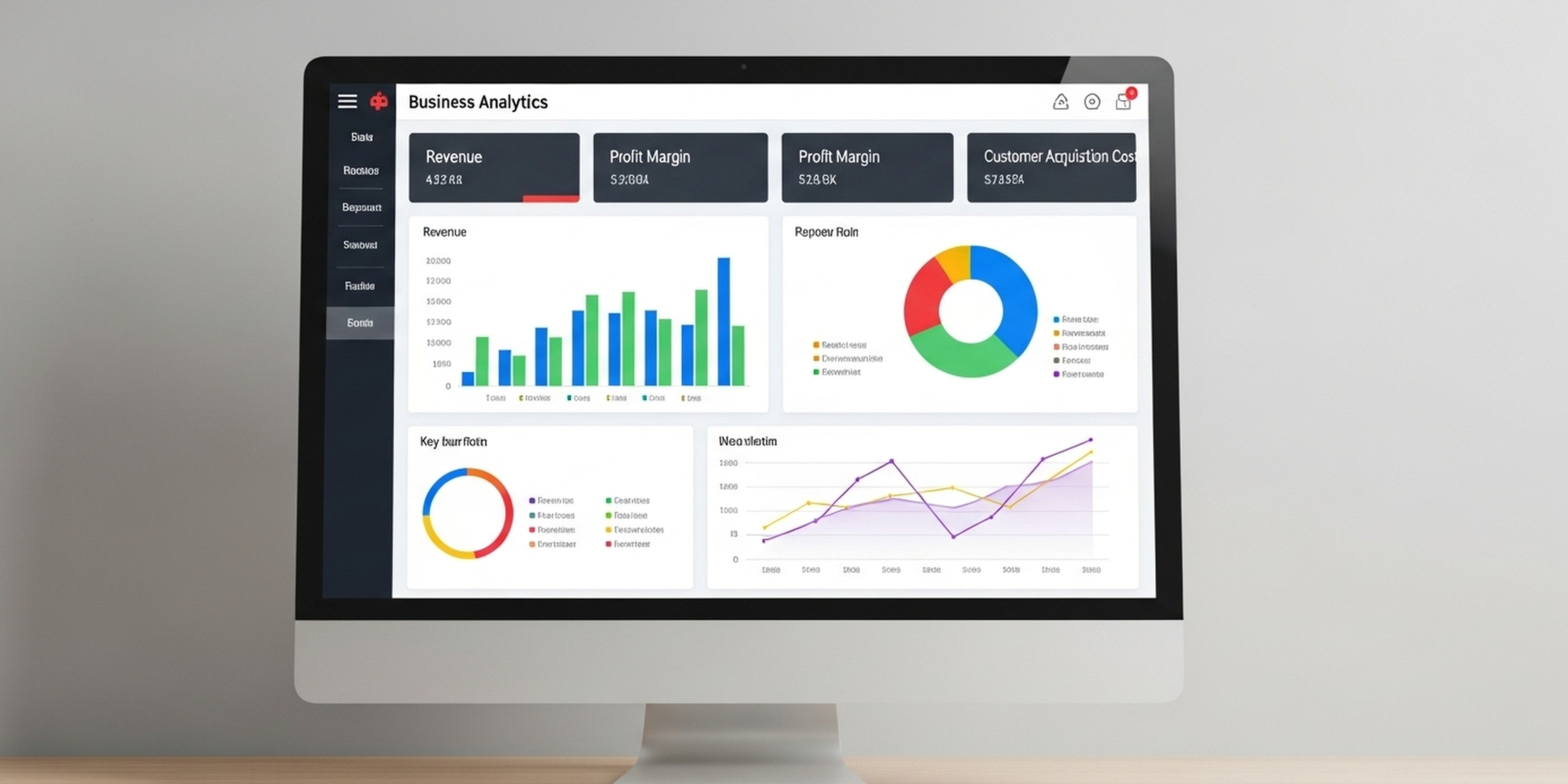
Dashboard Tools: Platforms like Google Data Studio or Tableau create visual reports that make ROI clear for stakeholders.
Errors in the Process of Measuring SEO ROI.
The following are some of the pitfalls that Code Inc Solutions encounters regularly:
Being Too Impatient: SEO is a time-consuming process. Do not make judgments of ROI within one or two months. Allow it at least half a year to show some significant outcomes.
Ignoring Indirect Benefits: SEO creates brand awareness, credibility, and trust. Such advantages are difficult to describe but very precious.
Failing to Track All Costs: Incomplete cost tracking causes your ROI to have an improved appearance. Be comprehensive and transparent on anything to do with costs.
Ignoring Non-Revenue Objectives: Not every conversion has a monetary value attached to it. Newsletter subscriptions and content downloads will build a readership that can eventually be made profitable.
Apples and Oranges: Do not compare the SEO ROI to the paid advertising in the same period of time. SEO offers compounding, long-term returns.
Improving Your SEO ROI
It is time to improve it the same way: when you learn to measure SEO ROI.
Target the high-intent keywords that show purchase eagerness. Make your landing pages and calls to action more effective in order to increase your conversion rates. Produce content that actually responds to searcher queries and solutions. Establish quality backlinks with related authoritative websites. User-friendliness, such as page speed, mobile-friendliness, and simple navigation, is to be optimized.
Conclusion
It is important to learn, with respect to achieving business success, how to measure the SEO ROI in 2026. These data-driven decisions are possible by measuring the costs better, assigning revenue appropriately, and using the correct metrics to demonstrate that your investment in SEO has been worthwhile.
In Code Inc Solutions, the most effective SEO is based on transparent and measurable outcomes. You can begin to use these measurement strategies today, and you will have a clear picture of whether your SEO activities are actually growing your business.
It is important to remember that SEO is one of the marketing channels that improves over time. The rankings and traffic that you are creating today keep giving value in the future. Once you calculate SEO ROI correctly, you will realize that it is one of the most appropriate long-term investments that you can ever make in your business.